

Within the manual Protocols for experimental plot sampling, handling and processing of cereals in field experiments

There may be the need entry measures of transpiration efficiency (aka leaf-level water-use efficiency). A robust surrogate for transpiration efficiency is carbon isotope discrimination measured using a mass spectrometer.
Method
- Obtain dried leaf samples from plants sampled at DC30 (c. 5 liguled leaves for spring wheats) using the procedure in preceding section.
- Mill samples to a consistently fine sample using a 1 mm screen.
- Ensure mill is cleaned between samples and milling mechanism does not get too warm during the milling process (warm parts are harder to clean between samples).
- Place milled samples into labelled 30mL screw top vial for storage and transportation (preferably in glass to avoid any static electricity).
- Send labelled vials along with trial details to an accredited laboratory for processing using a mass spectrometer (Fig. 14). Charge per sample varies but is commonly US$20-40/sample.
a)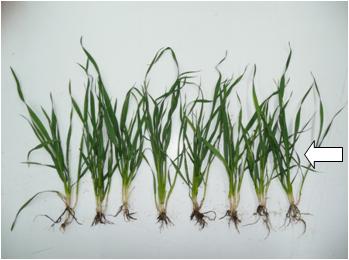 |
b)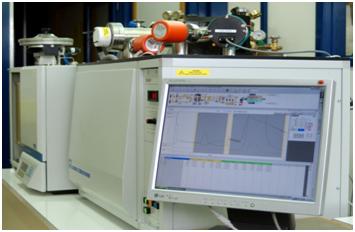 |


Figure 14. (a) The approximate height for cutting leaf blades for drying and grinding for carbon isotope discrimination analysis; (b) A mass spectrometer used in 12C/13C discrimination analysis
Other resources
Appendix 1.
Appendix 2.
Zadoks JC, Chang TT, Konzak CF (1974) A decimal code for the growth stages of cereals. Weed Research 14(6),415-421. doi: 10.1111/j.1365-3180.1974.tb01084.x
Notes and troubleshooting tips
Literature
Download complete manual: Protocols for cereal field experiments_Nov2012.pdf
Health, safety & hazardous waste disposal considerations